Hallux Valgus (Bunion Deformity)
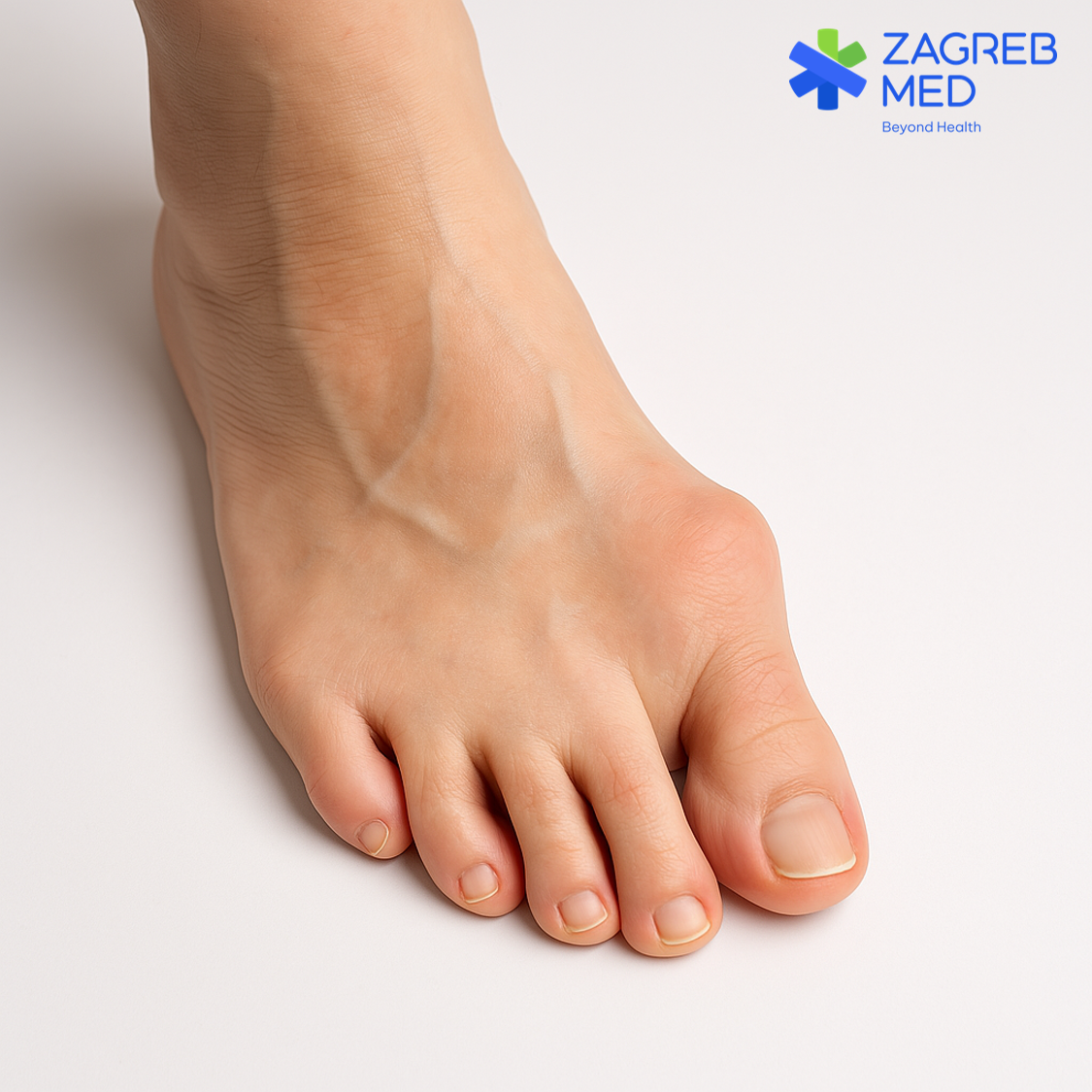
Hallux valgus, commonly known as a bunion, is one of the most frequent foot deformities. It is characterized by the deviation of the big toe towards the other toes and the formation of a bony bump on the inner side of the foot. This condition can cause pain, difficulty walking, and issues with footwear. It is more common in women, and contributing factors include genetics, improper footwear (narrow or high-heeled shoes), flat feet, and prolonged foot strain.
Symptoms of Hallux Valgus
-
Bony bump on the inner side of the foot
-
Pain and swelling around the big toe
-
Redness and skin irritation due to friction with footwear
-
Limited mobility of the big toe
-
Deformation of other toes due to pressure from the big toe
Diagnosis of Hallux Valgus
Diagnosis is made through a clinical examination, where a doctor assesses the appearance, mobility, and pain level of the foot. To determine the severity of the deformity, X-rays are used to measure the angle of deviation of the big toe and detect possible degenerative changes in the joint.
Treatment of Hallux Valgus
Treatment depends on the severity of the deformity and symptoms. Conservative methods include wearing orthopedic footwear, custom insoles, toe separators, and foot-strengthening exercises. Anti-inflammatory medications and ice packs can help reduce pain and swelling. In severe cases, when pain interferes with daily activities, surgical correction is recommended.
When to See a Doctor
A doctor should be consulted if the pain worsens, the foot deformity progresses, or conservative treatments fail to provide relief. Early intervention can prevent further deterioration and reduce the need for surgery.