Treatment with hair follicle stem cells
About
Hair follicle stem cell treatment is a regenerative scalp procedure used in selected patients with early or moderate hair loss, visible hair thinning, or a receding hairline. The term is often used for treatments that use a small sample of the patient’s own scalp or hair-bearing tissue, process it into a concentrated suspension rich in autologous cellular and tissue components, and place it into areas where follicles are still present but weakened.
This treatment is usually considered by people who notice progressive hair loss, reduced density, wider part lines, or hair thinning that has not fully responded to topical or medical treatment. It may also be discussed when a receding hairline is present but the scalp still contains active follicular units. It is not the same as a hair transplant, and it does not create new follicles in areas where the follicles are no longer active.
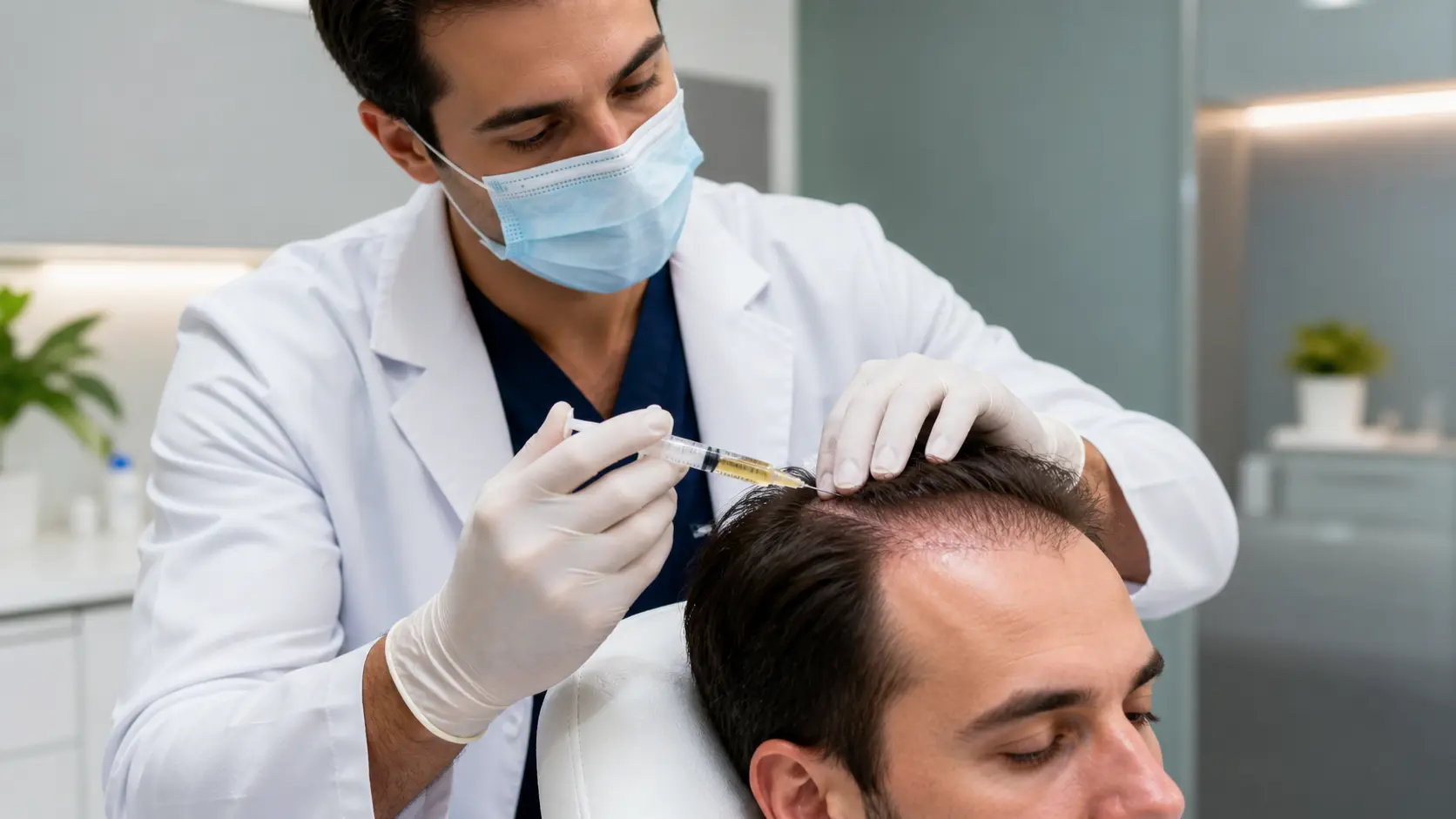
What hair follicle stem cell treatment is used for
The aim of the procedure is to support the scalp environment around existing hair follicles. In practical terms, it is usually discussed as part of a wider hair restoration plan for androgenetic alopecia, early density loss, diffuse thinning, or selected cases where the goal is to improve follicle support rather than surgically move hair follicles from one area to another.
Because hair loss can have many causes, the first step is not the procedure itself. A clinical assessment is needed to understand whether the pattern looks hormonal, genetic, inflammatory, nutritional, medication-related, stress-related, or associated with another medical condition. Treating the wrong cause with a regenerative procedure can delay more appropriate care.
Key facts
- Treatment type: regenerative scalp procedure using autologous tissue components
- Typical setting: outpatient medical setting
- Common intent: early hair loss, hair thinning, or selected receding hairline patterns
- Candidate suitability: depends on diagnosis, follicle activity, scalp condition, and expectations
- Results: gradual and variable, not guaranteed
- Important limitation: it does not replace hair transplantation in advanced bald areas
Who may consider this treatment
Hair follicle stem cell treatment may be relevant for adults who still have visible miniaturized or weakened hair in the affected areas. These patients are often looking for a non-transplant option or an additional regenerative approach that may support the scalp before hair loss becomes more advanced.
It may not be suitable for people with complete baldness in the target area, untreated scarring alopecia, active scalp infection, uncontrolled inflammatory scalp disease, unrealistic expectations, or hair loss caused by an untreated systemic issue. A medical evaluation is important because different types of hair loss require different treatment strategies.
How the procedure usually works
Step 1: Hair and scalp evaluation
The process usually starts with a consultation focused on the hair loss pattern, family history, medication use, hormonal factors, previous treatments, and scalp condition. Photographs, dermoscopic evaluation, or laboratory tests may be recommended when the cause of hair loss is unclear.
Step 2: Treatment planning
If the patient is a suitable candidate, the doctor explains what the procedure can and cannot reasonably do. The plan may include the target areas, expected recovery instructions, follow-up timing, and whether the treatment should be combined with other medically appropriate hair loss therapies.
Step 3: Tissue collection
On the treatment day, a small sample of hair-bearing scalp tissue is typically collected under local anesthesia. The sampling area is chosen so that it causes minimal visible impact. The exact technique depends on the clinic protocol and the device or preparation method used.
Step 4: Processing and application
The collected tissue is processed into a suspension that can be injected or applied into selected thinning areas of the scalp. The goal is to place autologous regenerative components near follicles that may still have biological activity.
Step 5: Recovery and follow-up
Most patients can usually return to light daily activities soon after treatment, but scalp tenderness, mild swelling, small scabs, or temporary redness can occur. Follow-up is used to monitor scalp response, compare photographs, and decide whether additional treatment or a different approach is needed.
Realistic results and limitations
Results are gradual and vary from person to person. Some patients may notice reduced shedding, better hair texture, or improved density over time, while others may have limited change. The response depends on the type and stage of hair loss, follicle activity, age, general health, scalp condition, and whether the underlying cause is being treated.
This treatment should not be presented as a guaranteed solution for baldness. It is better understood as a regenerative option for selected patients with remaining follicles. In more advanced hair loss, hair transplantation, medical therapy, or a combined treatment plan may be more appropriate.
Precautions before deciding
Patients should be cautious with any treatment that promises guaranteed hair regrowth, permanent reversal of baldness, or results without proper diagnosis. Medical evaluation is especially important if hair loss is sudden, patchy, associated with itching or scaling, linked with recent illness, or accompanied by symptoms such as fatigue, menstrual changes, or unexplained weight changes.
Through ZagrebMed, patients can send an inquiry to review whether hair follicle stem cell treatment is a reasonable option and what diagnostic or specialist assessment may be needed before deciding.
Candidate
Hair follicle stem cell treatment may be considered for adults with early or moderate hair thinning, progressive density loss, or selected receding hairline patterns where active follicles are still present. It is most relevant when the goal is to support existing follicles rather than replace missing follicles surgically. The treatment may not be suitable for complete bald areas, untreated scarring alopecia, active scalp infection, uncontrolled inflammatory scalp disease, or hair loss caused by an untreated medical condition. A specialist evaluation is needed before deciding because candidacy depends on diagnosis, scalp condition, follicle activity, and realistic expectations.
Preparation
Preparation usually starts with a consultation and scalp assessment. The doctor may review the hair loss pattern, previous treatments, medications, medical history, family history, and possible triggers such as hormonal changes, nutritional deficiency, stress, or recent illness. Patients may be asked to bring previous laboratory results, photographs, dermatology reports, or records of hair loss treatments already used. Depending on the case, blood tests or dermoscopic scalp evaluation may be recommended before treatment. Medication instructions, hair washing guidance, and any temporary restrictions are defined by the treating clinic.
Treatment
The procedure is usually performed in an outpatient medical setting. A small sample of hair-bearing scalp tissue is collected under local anesthesia, processed into a suspension, and applied or injected into selected thinning areas of the scalp. The target areas are planned before treatment. Patients may feel pressure, mild discomfort, or scalp sensitivity during and after the procedure. Most people can usually return to light daily activities soon afterward, although the scalp may remain tender, red, or mildly swollen for a short period.
Result
Results are gradual and vary between patients. Some people may notice reduced shedding, improved hair quality, or better visible density over time, while others may have a limited response. The outcome depends on the type and stage of hair loss, follicle activity, general health, scalp condition, and whether other contributing causes are being managed. This treatment does not guarantee hair regrowth and does not create new follicles in areas where follicles are no longer active. Follow-up photographs and clinical review help assess whether the response is meaningful and whether additional treatment options should be discussed.
Precautions
Hair follicle stem cell treatment should be approached carefully when hair loss is sudden, patchy, associated with inflammation, or linked with symptoms that may suggest an underlying medical condition. Diagnosis should come before treatment planning. Possible short-term effects include scalp tenderness, redness, mild swelling, bruising, small scabs, or temporary discomfort at the sampling or treatment sites. Patients should contact a doctor if they develop increasing pain, spreading redness, fever, discharge, significant swelling, or any symptom that feels unusual after treatment.
F.A.Q.
No. Hair follicle stem cell treatment is a regenerative scalp procedure intended to support existing follicles. Hair transplantation moves hair follicles from a donor area to areas with hair loss. The most appropriate option depends on the pattern and stage of hair loss.
Typical candidates have early or moderate thinning with follicles still present in the treated area. People with complete baldness in the target area, active scalp disease, scarring alopecia, or untreated medical causes of hair loss may need a different approach.
It may be discussed when the receding hairline still contains weakened or miniaturized follicles. If the area has no active follicles, regenerative treatment alone is unlikely to replace what has been lost, and hair transplantation or another strategy may be more relevant.
Hair changes are usually gradual. Some patients notice changes over several months, but timing varies. Follow-up photographs and clinical review are useful because hair density changes can be difficult to judge from day to day.
Local anesthesia is usually used for tissue collection, and patients may feel pressure, mild discomfort, or sensitivity. Temporary scalp tenderness, redness, swelling, or small scabs can occur after the procedure.
No. Results vary by diagnosis, follicle activity, stage of hair loss, age, scalp condition, and other health factors. A responsible treatment plan should explain expected benefits, limitations, alternatives, and when the procedure may not be appropriate.

Send an inquiry for the treatment
Start your way towards a successful treatment today. Fill out the form with your data, choose the service you need and we will connect you with the top medical experts in Zagreb.