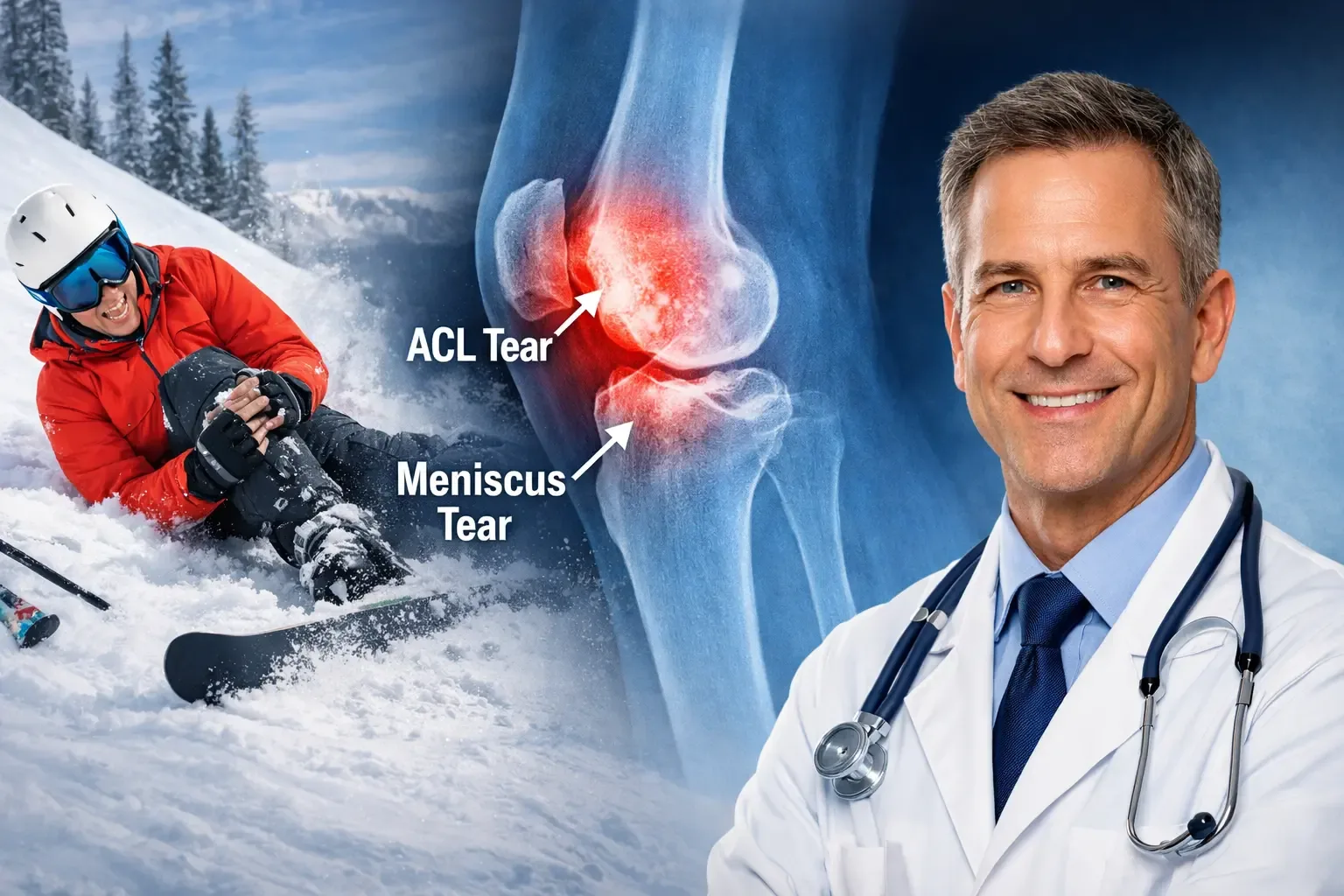
ACL and meniscus injuries are among the most common knee injuries in skiing and other winter sports. Rotational forces, sudden stops and high speed place extreme stress on the knee joint. Modern orthopedic medicine now offers minimally invasive treatments and structured rehabilitation programs that allow many patients to safely return to sport.
Key facts about skiing knee injuries
- ACL injuries represent up to 50% of serious knee injuries in skiing
- Most injuries occur late in the day due to fatigue
- Proper rehabilitation usually takes 6 to 9 months
- Early diagnosis significantly improves recovery outcomes
Fresh mountain air, perfect snow, and the rhythm of movement down the slope make winter sports one of the most exhilarating outdoor experiences. Skiing and snowboarding combine balance, speed, and concentration in a way that feels effortless when the body and mind work in harmony.
Yet beneath this feeling of freedom lies remarkable biomechanical precision. Every turn, landing, and sudden change of direction places enormous stress on the knee joint. For many athletes and recreational skiers alike, the knee becomes the most vulnerable structure on the slopes.
Among winter sports injuries, damage to the anterior cruciate ligament (ACL) and the meniscus are particularly common. Understanding how these injuries occur and how modern orthopedic medicine treats them can make the difference between prolonged limitation and a confident return to activity.
Why the Knee Is Vulnerable in Winter Sports
The knee joint is designed to provide both mobility and stability. It allows powerful movement while maintaining alignment between the femur, tibia, and patella.
Winter sports place unique demands on the joint because of rotational forces, speed, and changing terrain. Several factors increase the risk of knee injury:
- Rotational forces during turns
- Sudden deceleration or awkward landings
- Fixed ski bindings that limit natural rotation
- Fatigue toward the end of the day
- High speed combined with uneven terrain
When these forces exceed the capacity of the knee, injury can occur within seconds.
The most common knee injuries in skiing and snow sports include ACL rupture, meniscus tear, ligament instability, and cartilage damage. These injuries affect not only the joint itself but also coordination, confidence, and the ability to move naturally.
The Meniscus: Shock Absorption and Joint Protection
The meniscus consists of two crescent shaped cartilage structures located between the femur and tibia. Their role is essential for distributing weight and absorbing impact inside the knee joint.
The meniscus performs several key functions:
- Absorbing impact during movement
- Balancing pressure within the joint
- Stabilizing knee motion
- Protecting the cartilage surfaces
When a meniscus tear occurs, patients often experience swelling, pain, locking, or catching sensations in the knee. Without treatment, meniscus damage can accelerate joint degeneration and increase the risk of osteoarthritis.
Modern orthopedic treatment focuses on preserving as much healthy meniscal tissue as possible. Minimally invasive procedures such as knee arthroscopy and meniscus repair allow surgeons to treat the injury while maintaining the natural function of the joint.
ACL Injuries: The Key Stabilizer of the Knee
The anterior cruciate ligament plays a crucial role in controlling forward movement and rotation of the tibia relative to the femur. During skiing, ACL injuries often occur when the body rotates while the ski remains fixed.
Typical symptoms of an ACL rupture include:
- A popping sensation at the moment of injury
- Rapid swelling of the knee
- Instability or the feeling that the knee may give way
- Difficulty continuing activity
Without proper treatment, ACL injuries can lead to repeated instability and further damage to the meniscus or cartilage.
In many cases, stability can be restored through ACL reconstruction surgery, a minimally invasive procedure designed to rebuild the damaged ligament and restore knee stability.
Accurate Diagnosis Is the Foundation of Treatment
Successful treatment begins with precise diagnosis. Orthopedic specialists evaluate knee stability, swelling, range of motion, and injury mechanism during a clinical examination.
Magnetic resonance imaging (MRI) is often required to confirm the diagnosis and identify associated injuries to the ligaments, cartilage, or meniscus.
For patients experiencing knee instability or persistent pain after skiing accidents, an orthopedic examination is the first step toward determining the most appropriate treatment strategy.
Modern Knee Surgery: Preserving the Natural Joint
Orthopedic surgery has evolved significantly over the past decades. Today, the guiding principle is to restore stability and function while preserving natural joint structures whenever possible.
Minimally invasive arthroscopic techniques allow surgeons to treat ligament injuries and meniscus damage through very small incisions, reducing trauma to surrounding tissue and supporting faster recovery.
At Mavie Med Private Hospitals in Austria, orthopedic specialists combine advanced diagnostics with modern surgical techniques and individualized treatment planning.
In many cases, ligament reconstruction and meniscus repair can be performed during the same procedure, allowing coordinated healing and improved long term results.
Rehabilitation: The Key to Safe Recovery
Recovery from knee injury does not end with surgery. Rehabilitation is essential for restoring strength, mobility, and confidence in the joint.
A structured rehabilitation program typically includes progressive strengthening exercises, neuromuscular training, balance work, and gradual return to sports activity.
Through specialized physical therapy and rehabilitation, patients can rebuild joint stability and reduce the risk of reinjury.
In selected cases involving chronic inflammation or tendon overload, regenerative treatments such as PRP therapy may also support the healing process.
Orthopedic Excellence and Personalized Care
Austria is internationally recognized for high quality orthopedic and sports trauma medicine. At Mavie Med Private Hospitals, highly specialized orthopedic teams combine medical expertise with advanced technology and personalized patient care.
This approach ensures that patients receive not only effective treatment but also comprehensive guidance throughout diagnosis, surgery, and recovery.
Because excellent orthopedic medicine is not only about repairing injuries. It is about restoring movement, confidence, and long term quality of life.
F.A.Q.
The most common knee injuries in skiing include ACL ruptures, meniscus tears, medial collateral ligament injuries, and cartilage damage. ACL injuries are particularly frequent due to rotational forces on the knee.
Some minor meniscus tears may heal with conservative treatment such as rest, physiotherapy, and activity modification. However, larger or unstable tears may require surgical repair.
Recovery after ACL reconstruction typically takes between 6 and 9 months before returning to high level sports. Rehabilitation is essential for restoring strength and stability.
Minimally invasive knee surgery uses arthroscopic techniques performed through small incisions with specialized instruments and cameras. This approach reduces tissue damage and accelerates recovery.
Yes. Many patients successfully return to skiing and other sports after ACL reconstruction, provided they complete proper rehabilitation and regain full strength and stability.
Preventive strategies include strength training for the legs, proper warm up, maintaining good technique, using correctly adjusted ski bindings, and avoiding fatigue late in the day.