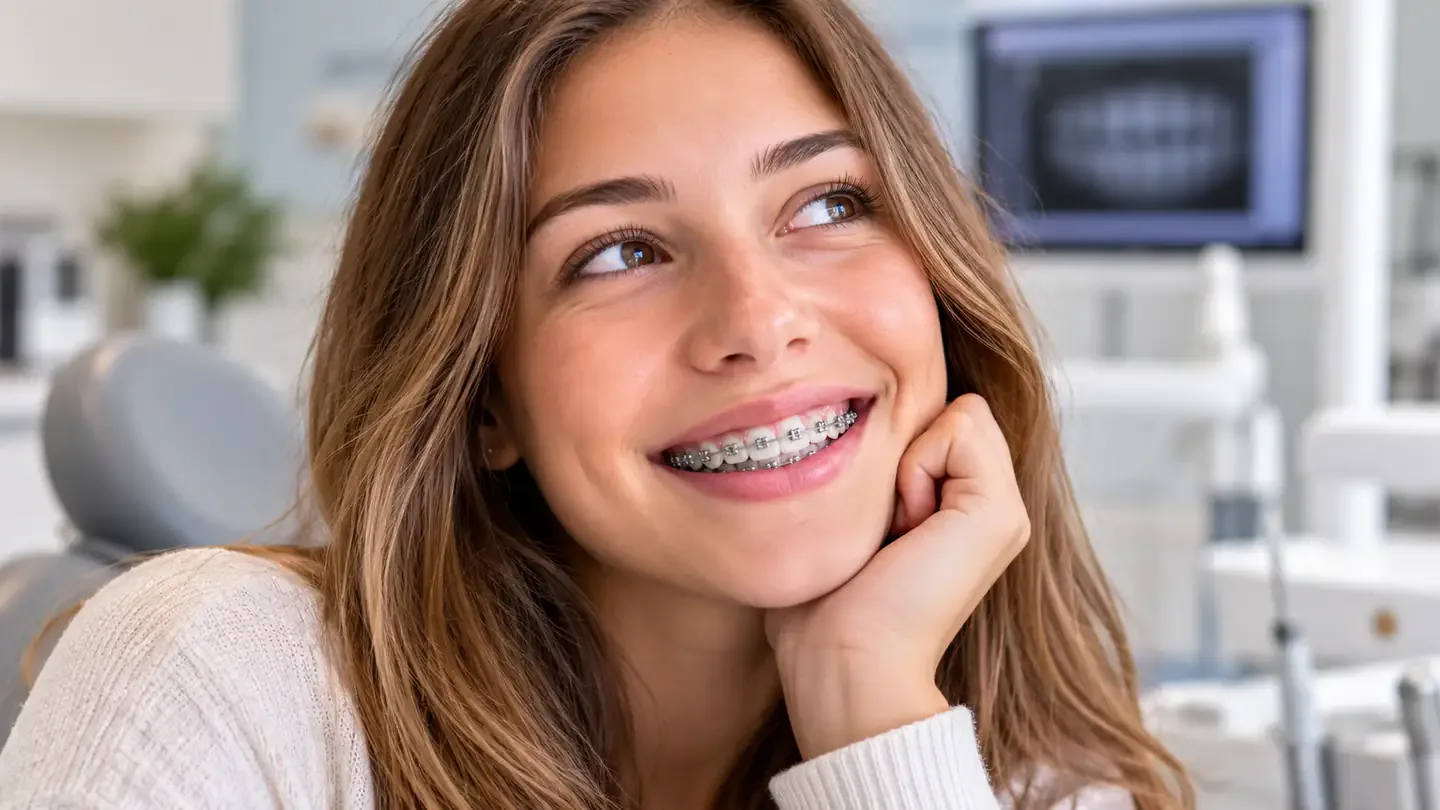
One of the most common concerns before getting braces is surprisingly simple: will it hurt? Perhaps you have been thinking about straightening your teeth for years, but the thought of painful adjustments, difficulty eating, or wearing brackets every day makes you hesitate. The reassuring reality is that most patients experience temporary tenderness rather than continuous pain. Knowing what to expect can make those first days of orthodontic treatment considerably easier.
Whether you are considering braces for crowded and misaligned teeth, gaps between teeth, or an irregular bite such as a crossbite, understanding the adjustment period is an important part of preparing for treatment. Through ZagrebMed, you can explore orthodontic treatment options in Zagreb and arrange a specialist assessment before deciding which approach suits your needs.
Key facts
- Braces placement: Attaching brackets and placing the wire does not usually cause significant pain.
- Initial soreness: Tooth tenderness commonly develops during the first day and improves over the following days.
- Common sensations: Pressure when biting, sensitivity while chewing, and irritation of the lips or cheeks.
- Daily activities: Most patients can continue their normal routines, although eating may require temporary adjustments.
- Follow-up: Some tenderness may return after orthodontic adjustments.
- When to call: Persistent or worsening pain, significant swelling, or damaged appliance components need professional advice.
Why do braces cause soreness?
Fixed braces work by applying controlled forces to teeth. Brackets are bonded to the teeth and connected by orthodontic wires. These forces produce biological changes in the tissues and bone supporting the roots, allowing teeth to move gradually toward their planned positions.
During this process, the tissues surrounding the teeth respond to pressure. This can make individual teeth or entire areas of the dental arch feel tender, particularly when biting into food.
There is an important distinction between the discomfort associated with planned tooth movement and pain caused by a mechanical problem with the appliance. Generalized tooth tenderness after braces are placed is common. A sharp wire cutting into the cheek, a broken bracket, or worsening localized pain is different and may need attention.
Pain also varies from one person to another. Some patients experience very little discomfort, while others find the first few days more challenging. The intensity of soreness does not reliably indicate how well or how quickly treatment is working.
What happens during your first week with fixed braces?
Day one: Getting used to the appliance
When the brackets and wire are first fitted, your teeth may not feel particularly sensitive immediately. You are more likely to notice that your mouth feels unfamiliar or that the brackets touch the inside of your lips.
Later in the day, tenderness may develop as your teeth begin responding to orthodontic forces. Biting firmly into food can become uncomfortable, even when you are not experiencing pain at rest.
Speaking and smiling may also feel slightly unusual at first. This is generally an adjustment to having a new appliance in your mouth rather than a sign that something is wrong.
Days two and three: Tenderness may be more noticeable
For many patients, the first 24 to 48 hours are when tooth sensitivity is particularly noticeable. You may prefer foods that require little chewing, and biting directly with your front teeth may feel unpleasant.
Some areas of the mouth may also be irritated by contact with brackets or wires. The cheeks and lips need time to adapt to surfaces that were not previously there.
This does not mean that every patient will have the same experience or that discomfort follows an exact timetable. Individual sensitivity, the type of treatment, and the adjustments made can affect how the first days feel.
Days four to seven: Everyday activities usually become easier
In many cases, tenderness gradually settles after the first few days. Eating becomes more comfortable, and patients become increasingly familiar with the appliance.
However, the first week is not a guaranteed deadline for all soreness to disappear. If discomfort remains significant, prevents normal eating, or is becoming worse instead of better, contact your orthodontist rather than simply waiting for the next scheduled visit.
How can you make the first days more comfortable?
A little preparation can make a meaningful difference. You do not need to reorganize your entire life around braces, but adjusting food choices and keeping basic orthodontic supplies nearby can make the transition smoother.
- Choose softer meals: Yogurt, eggs, soup, soft pasta, mashed vegetables, and similarly easy-to-chew foods are practical options during periods of tenderness.
- Cut food into smaller pieces: Avoid biting directly into hard foods when your front teeth are sensitive.
- Use orthodontic wax when instructed: Wax can create a smoother surface over a bracket or a wire that irritates the inner cheek or lip.
- Keep your mouth clean: Gentle but thorough brushing helps prevent plaque accumulation and gum irritation.
- Discuss pain relief if needed: Your orthodontist, dentist, or pharmacist can advise whether an appropriate over-the-counter medicine is suitable for you.
Warm saltwater rinses may provide temporary comfort for minor soft-tissue irritation. They are not a substitute for an examination if a wire continues to injure your cheek or a sore is not improving.
It is also worth avoiding the temptation to repeatedly test whether a sensitive tooth still hurts. Constantly pressing on it or biting hard foods does not help the adjustment process.
When is pain not a normal part of braces treatment?
The most useful question is not simply whether you feel discomfort, but what kind of discomfort you are experiencing and how it is changing.
Expected adjustment soreness is usually relatively diffuse, particularly noticeable when chewing, and tends to diminish. Problems with the appliance are more likely to cause sharp or localized irritation, persistent rubbing, or a sudden change in how the braces feel.
Contact your orthodontist if you notice:
- Tooth pain that remains substantial or becomes worse after the initial adjustment period.
- A wire that repeatedly cuts or presses into the cheek, tongue, or gum.
- A loose bracket, displaced wire, or another damaged orthodontic component.
- Markedly swollen, painful, or bleeding gums that are not improving.
- A mouth sore that persists or makes eating and speaking difficult.
Significant facial swelling, fever with worsening dental symptoms, or severe dental pain requires prompt dental assessment. Difficulty breathing or swallowing is an emergency and requires immediate medical attention.
Do not try to remove bonded brackets or make major adjustments to the appliance yourself. Your orthodontic team can advise whether a minor temporary measure is appropriate or whether an earlier appointment is necessary.
Do metal, aesthetic, and self-ligating braces feel different?
Not every fixed orthodontic appliance looks or works in exactly the same way. Patients often assume that a newer bracket design or a more expensive system must automatically be more comfortable. That is not necessarily the case.
Traditional metal braces use metal brackets and an orthodontic wire held in place by ligatures. They provide controlled tooth movement but require patients to adapt to the brackets, wires, and careful daily cleaning.
Traditional aesthetic braces use brackets that are less visually noticeable. Their appearance may appeal to patients who want a more discreet fixed appliance, but they can still cause initial tooth tenderness or soft-tissue irritation.
Self-ligating metal braces hold the orthodontic wire using a built-in bracket mechanism rather than conventional ligatures. This design difference does not guarantee less pain, faster treatment, or fewer clinical problems for every patient.
The Damon Ultima system is another fixed orthodontic option with specific bracket and wire characteristics. It still relies on planned tooth movement, clinical monitoring, and individual biological responses.
SPARK clear aligners are a different approach. They use removable transparent trays rather than fixed brackets and wires. They may avoid some bracket-related cheek irritation, but pressure or tooth tenderness can still occur when patients begin wearing new trays. Their suitability depends on the type of orthodontic problem and the patient's ability to follow wearing instructions.
The choice of appliance should therefore reflect your orthodontic diagnosis, desired tooth movements, oral health, and practical preferences, not a promise that one particular system will be pain-free.
Eating, brushing, and living with braces
Adapting to braces is about more than managing discomfort. Good daily habits protect your teeth and help prevent avoidable interruptions to orthodontic treatment.
What should you eat?
During the initial adjustment period, softer meals can reduce discomfort when chewing. Later, most patients return to a broad range of foods, with modifications to protect the appliance.
Hard, very crunchy, and sticky foods can damage brackets or bend wires. Apples and other firm foods can often be cut into manageable pieces rather than bitten directly. Follow the specific instructions given by your orthodontist.
How do you clean around brackets?
Food particles and dental plaque can accumulate around brackets and beneath wires. Brushing with fluoride toothpaste and using suitable interdental cleaning tools are particularly important.
Inadequate cleaning during treatment increases the risk of gum inflammation, tooth decay, and white areas of enamel demineralization around brackets. Orthodontic treatment does not remove the need for routine appointments with your regular dentist.
Oral hygiene is therefore part of treatment quality, not simply a cosmetic detail. If cleaning is difficult, ask your orthodontic team to demonstrate the correct technique and suitable tools.
What happens after later adjustments?
You may experience temporary tenderness after appointments when wires or other orthodontic components are adjusted. This does not mean every visit will be equally uncomfortable.
Regular controls also allow the orthodontist to assess tooth movement, bite changes, gum health, and appliance integrity. Keeping these appointments is important for safe treatment progression.
How do you prepare before starting orthodontic treatment in Zagreb?
Before braces are fitted, a comprehensive orthodontic examination helps establish why treatment is needed and which appliance is appropriate.
Some patients are concerned mainly about how their smile looks. Others have problems with chewing, difficult-to-clean overlapping teeth, or bite relationships such as a deep bite or an open bite. Patients may also seek assessment for high-positioned canine teeth, protruding front teeth and increased overjet, or an underbite. These different concerns may require different treatment objectives.
The orthodontist examines the teeth, gums, bite, and relevant dental history. Clinical photographs, digital scans, and dental imaging may be used when indicated. Existing decay, significant gum inflammation, or other oral health concerns may need to be addressed before active treatment begins.
In Zagreb, Dr. Vedrana Grgurevic, a specialist in orthodontics and founder of Viaorto orthodontic practice, provides specialist assessment and orthodontic care using fixed appliances and clear aligners. Her clinical approach incorporates digital diagnostic records and individualized treatment planning.
Understanding the proposed treatment, its practical requirements, the expected adjustment period, and the role of retention can help patients feel more confident before beginning.
If you are traveling to Zagreb from another country, remember that orthodontic treatment generally requires ongoing clinical monitoring. Before starting, discuss the likely follow-up arrangements and what should happen if an appliance problem develops while you are away.
When sending an inquiry through ZagrebMed, it is useful to include your main concern, any previous orthodontic treatment, available dental records or X-rays, and the dates when you could attend an initial assessment. ZagrebMed can help organize the next step and connect you with appropriate orthodontic care in Zagreb.
F.A.Q.
Most patients can return to work, school, or their usual activities immediately after braces are fitted. Your teeth may become sensitive later in the day, and speaking or eating may feel different at first. Planning softer meals and keeping orthodontic wax available can make the transition more comfortable.
Yes. Some teeth may be more sensitive than others because orthodontic forces and planned movements are not identical for every tooth. Mild differences in tenderness can be normal during the adjustment period. However, severe, sharply localized, or worsening pain should be discussed with your orthodontist, particularly if it is associated with swelling or a damaged bracket.
Most everyday physical activities can continue during the first week with braces. If you participate in contact sports or activities where your mouth could be injured, ask your orthodontist about a suitable orthodontic mouthguard. Avoid activities that could damage the appliance, and seek advice if you experience an injury to your teeth or braces.
Orthodontic treatment involves gradual tooth movement and changes in the tissues supporting the teeth. Some patients notice a temporary difference in how their teeth feel during treatment. Avoid repeatedly pushing or testing individual teeth. If a tooth feels unusually mobile, becomes increasingly painful, or is associated with swollen gums, contact your orthodontist for an assessment.
If you experience discomfort while traveling, contact your orthodontic practice and explain your symptoms. Orthodontic wax may provide temporary relief from a bracket or wire irritating your cheek, but it cannot repair a damaged appliance. Persistent or severe pain, significant swelling, or an injury may require local dental attention. If you are planning orthodontic treatment in Zagreb while living abroad, discuss follow-up visits and emergency arrangements during your initial consultation.